History & Heritage
The story of 90% silver coinage in America, from everyday circulation to prized investment.
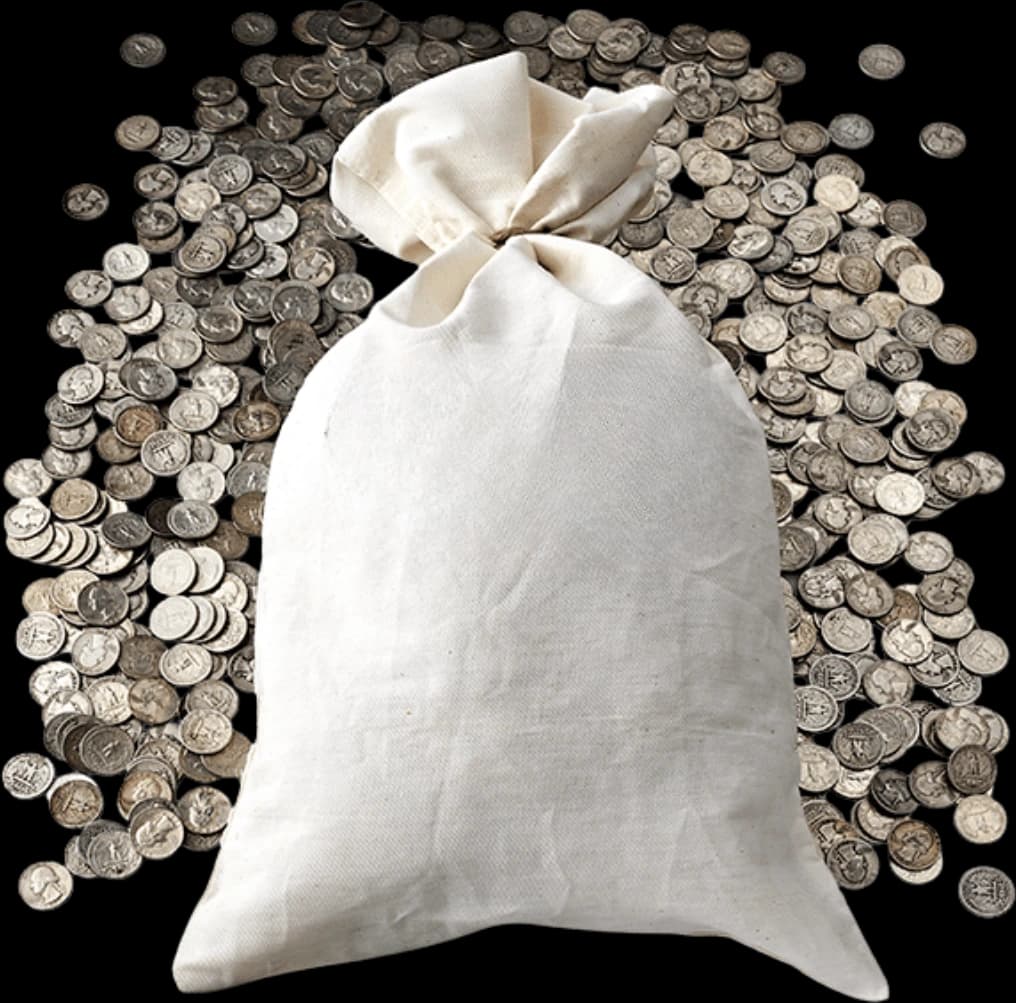
A $1000 face value bag of 90% silver coins contains approximately 715 troy ounces of pure silver in the form of pre-1965 U.S. dimes, quarters, and half dollars.
Constitutional Silver: An American Legacy
For over 170 years, silver was an integral part of American coinage. From the Coinage Act of 1792 until 1965, U.S. dimes, quarters, and half dollars contained 90% silver by weight. These coins circulated as everyday money, used for everything from buying groceries to paying rent.
Today, these pre-1965 coins are known as "constitutional silver" or "junk silver" (despite the name, they are anything but junk). Collected in bags by face value, they represent a direct connection to America's monetary history while providing intrinsic silver value.
The Silver Standard Era
The Coinage Act of 1792 established the U.S. dollar on a bimetallic standard of gold and silver. Silver coins were minted with a specific silver content that gave them intrinsic value equal to (or greater than) their face value.
The 90/10 Alloy: U.S. silver coins were minted from an alloy of 90% silver and 10% copper. The copper provided durability for circulation while the silver content gave the coins their monetary value.
This system worked well for over a century. Silver's relatively stable value meant that coins held their purchasing power, and the familiar designs became symbols of American commerce and trust.
Iconic Coin Designs in 90% Silver Bags
A typical bag of 90% silver may contain coins spanning several decades and featuring some of America's most beloved coin designs:
Dimes
- Barber Dime (1892-1916): Liberty head design by Charles Barber
- Mercury Dime (1916-1945): Winged Liberty by Adolph Weinman
- Roosevelt Dime (1946-1964): Honoring FDR after his death
Quarters
- Barber Quarter (1892-1916): Matching the dime design
- Standing Liberty (1916-1930): Liberty in flowing robes
- Washington Quarter (1932-1964): George Washington profile
Half Dollars
- Barber Half (1892-1915): Consistent Liberty head theme
- Walking Liberty (1916-1947): Widely considered one of the most beautiful U.S. coins
- Franklin Half (1948-1963): Featuring Benjamin Franklin
- Kennedy Half (1964): The last 90% silver half dollar
Collector Notes
- Walking Liberty halves are highly prized for their artistic design
- Mercury dimes often command slight premiums from collectors
- Key dates and mint marks may have numismatic value beyond silver content
- Most 90% bags contain common-date coins valued primarily for silver
1965: The End of Silver Coinage
By the early 1960s, rising silver prices created a problem: the silver content in U.S. coins was becoming worth more than their face value. People began hoarding silver coins, and the U.S. Mint struggled to keep coins in circulation.
The Coinage Act of 1965 eliminated silver from dimes and quarters entirely, replacing them with copper-nickel clad coins. Half dollars were reduced to 40% silver (1965-1970) before becoming clad as well.
"The United States is abandoning the use of silver in its subsidiary coinage because the world supply of silver is not adequate to meet the demands of coinage and industry."
- President Lyndon B. Johnson, 1965
From Pocket Change to Precious Metal
After 1965, savvy individuals began setting aside pre-1965 coins for their silver content. Banks and businesses accumulated bags of these coins, initially sorted by face value. Over time, a secondary market developed for these "junk silver" bags.
Today, 90% silver bags are a popular form of silver investment. A standard $1000 face value bag contains approximately 715 troy ounces of pure silver, making the silver content easy to calculate: simply multiply the face value by 0.715.
Why "Junk Silver"?
The term "junk" refers to the coins having no numismatic or collector premium, not their quality. These are real U.S. coins valued primarily for their silver content rather than rarity.
Constitutional Silver
Another common name for these coins, referencing their role in America's original constitutional monetary system where silver was legal tender.
Key Dates in U.S. Silver Coinage
Coinage Act establishes 90% silver standard for U.S. coins
Mercury dime and Walking Liberty half dollar introduced
Washington quarter debuts for George Washington bicentennial
Roosevelt dime introduced to honor FDR
Last year of 90% silver coinage for circulation
Coinage Act removes silver from dimes and quarters
90% silver bags remain popular as tangible silver investments
Why History Matters for Investors
Understanding the history of 90% silver coinage helps investors appreciate what makes these coins valuable:
- •Finite Supply: No more 90% silver coins will ever be minted. The supply only decreases as coins are lost, damaged, or melted.
- •Instant Recognition: These designs are familiar to Americans, requiring no assay or special knowledge to verify.
- •Government Guarantee: Each coin was minted by the U.S. government with standardized silver content.
- •Dual Value: Beyond silver content, some coins have additional numismatic value based on rarity, condition, or collector demand.
Related pages